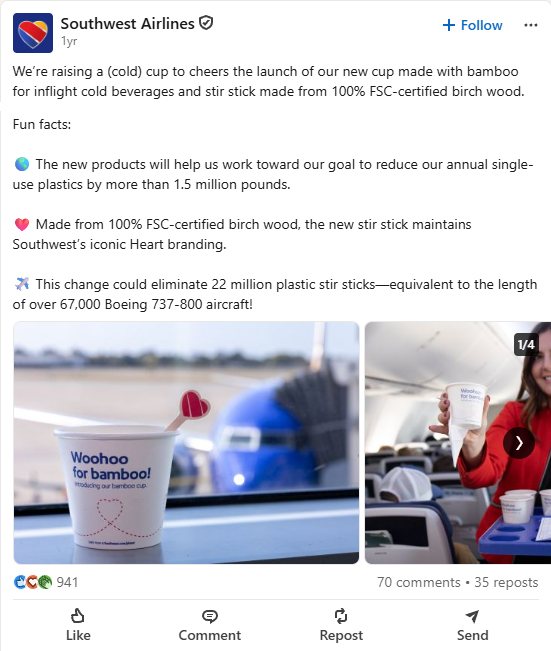
We’re raising a (cold) cup to cheers the launch of our new cup made with bamboo for inflight cold beverages.Southwest Airlines, LinkedIn
Southwest calls it progress. The truth is it’s greenwashing!
This cup is NOT plastic free.
And it is not even being recycled.
Keep scrolling to find out what Southwest isn’t telling you.
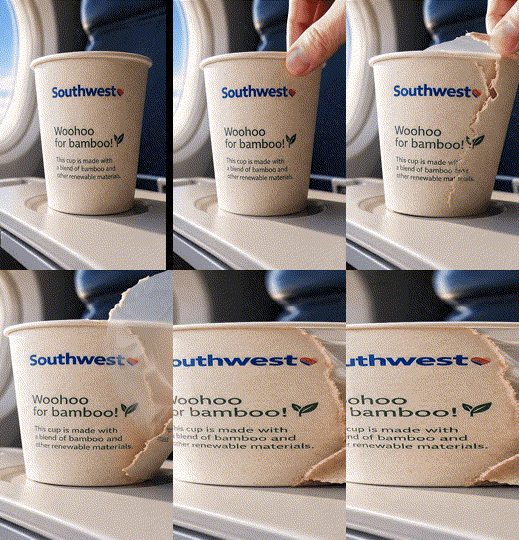
Printed on the cup

A plastic cup with a fancy eco-name. It cannot be recycled in most systems, and it is still a single-use cup thrown away on every flight.
Southwest wrote a slogan they never earned.
Southwest says the cup is made with a blend of bamboo and paper pulp, and finished with a layer of polyethylene PLASTIC right where our drink touches, leaching into our bodies and the environment.
The plastic lining sends 100% of the cup to landfill. This cup is not even being recycled.
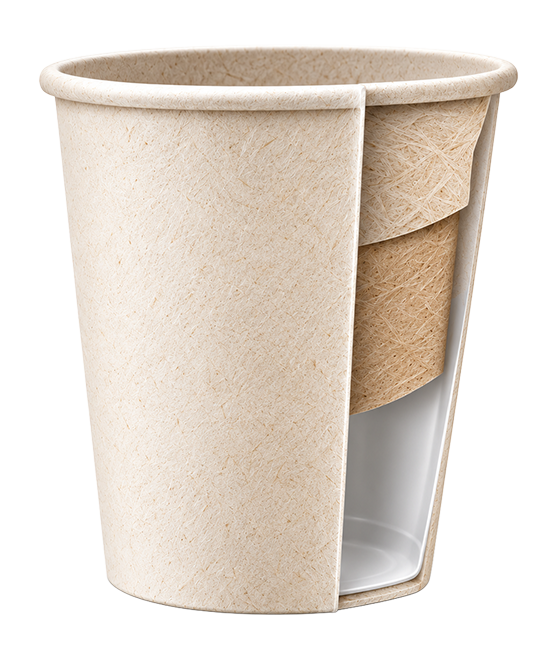
The lining is the whole story. This cup is not being recycled.
The airline, its chief executive and its sustainability lead all posted about the cup. Read all three. Zero mentions of the truth: PLASTIC!
We’re raising a (cold) cup to cheers the launch of our new cup made with bamboo for inflight cold beverages.Southwest Airlines, LinkedIn
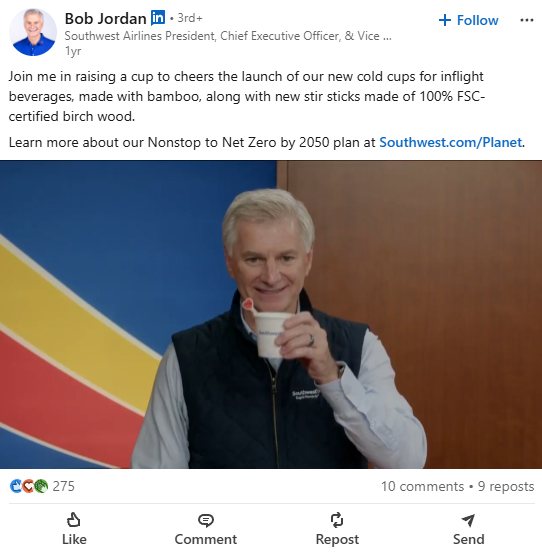
Join me in raising a cup to cheers the launch of our new cold cups for inflight beverages, made with bamboo.Bob Jordan, President and CEO, Southwest Airlines, LinkedIn
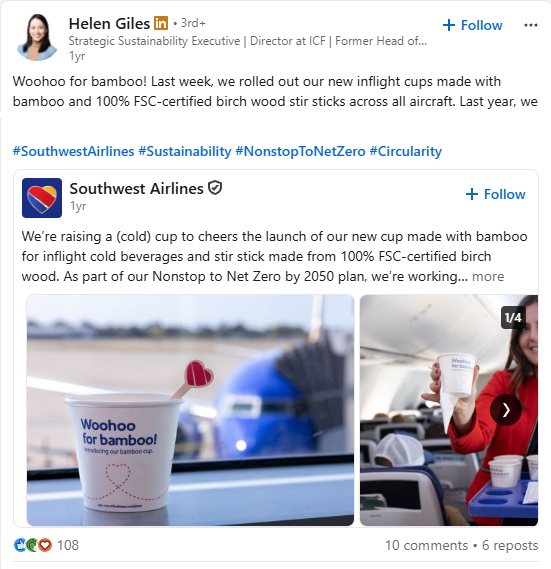
Woohoo for bamboo! Last week, we rolled out our new inflight cups made with bamboo … across all aircraft.Helen Giles, then Southwest’s environmental sustainability lead, LinkedIn
They told this sustainability story, but we don’t think they’ve earned a gold star here.
They are on the market today. Southwest chose a lined cup instead, and hands one to every passenger on every flight.
 0.94 kg
of cabin waste per passenger, per flight, on IATA’s own audits.
 Most
Mostare never recycled, whatever bin they are put in.
 Buried or burned
Most of it gets buried or burned, right along with Southwest’s “bamboo” cup.
One cup, on every flight, every day of the year.
Every piece of unnecessary plastic adds to a problem that already reaches our rivers, oceans and ecosystems worldwide.
Every river
ends somewhere.
 1.15–2.41MTonnes a year
of plastic carried into the ocean by rivers, every year. Lebreton et al., Nature Communications, 2017
 1.6M km²The Great Pacific Garbage Patch
More than twice the size of Texas, and still growing. Lebreton et al., Scientific Reports, 2018
 1.8 trillionPieces of plastic
floating in that one patch, weighing about 100,000 tonnes. Lebreton et al., Scientific Reports, 2018
Nothing about a lined cup ends when the flight does.
Plastic does not disappear. It breaks into fragments small enough to cross into the tissue of the people who threw it away, and researchers are now finding it everywhere they look.

You are already
carrying it.
 77%Of adults tested
had microplastics in their blood, 17 of 22 healthy donors. Leslie et al., Environment International, 2022
 23%Contained polyethylene
of those same blood samples. Polyethylene is the plastic that lines the cup. Leslie et al., Environment International, 2022
 52 of 52Human brain samples
contained microplastics, with 50% more found in 2024 than in 2016. Nihart et al., Nature Medicine, 2025
 4.5×Higher risk
of heart attack, stroke or death where microplastics were found in arterial plaque. Marfella et al., New England Journal of Medicine, 2024
The lining outlasts the flight by several hundred years. Ask Southwest to stop making more of it.
When major brands like Southwest commit to truly sustainable solutions, they inspire change across the entire industry, and help create a cleaner, healthier future for all of us.



Southwest, stop the act or we’ll keep telling the facts.
Sign the Petition on Change.org →